Horse Grooming
Horse grooming is a vital aspect of equine care, crucial for maintaining the health and well-being of your horse. For beginners, understanding the basics of grooming can be both exciting and daunting. This guide aims to provide an essential foundation for those new to horse grooming, ensuring you can care for your horse effectively and build a strong bond with them.
Understanding the Importance of Grooming
Grooming is not just about keeping your horse looking good; it plays a crucial role in their overall health. Regular grooming helps to:
- Improve circulation and promote healthy skin and coat.
- Identify any injuries or health issues early on.
- Build trust and bond between the horse and handler.
- Prevent skin infections and parasite infestations.
By committing to a regular grooming routine, you ensure your horse remains comfortable, healthy, and happy.
Essential Grooming Tools
Before you begin grooming, it’s essential to have the right tools. Here are some of the basic grooming tools every beginner should have:
- Curry Comb: Used to loosen dirt and hair from the horse’s coat.
- Body Brush: A stiff-bristled brush that removes dirt and loose hair.
- Soft Brush: Used for sensitive areas like the face and legs.
- Hoof Pick: Essential for cleaning the horse’s hooves and removing debris.
- Mane and Tail Comb: For detangling the mane and tail.
- Sponge or Cloth: Used to clean sensitive areas like the eyes, nose, and dock.
Step-by-Step Grooming Process
1. Start with the Curry Comb
The grooming process typically begins with using a curry comb. This tool helps loosen dirt, mud, and shedding hair from the horse’s coat. Use circular motions, starting at the neck and working your way back to the hindquarters. Be gentle around bony areas and avoid using the curry comb on the horse’s face and legs, as these areas are more sensitive.
2. Body Brushing
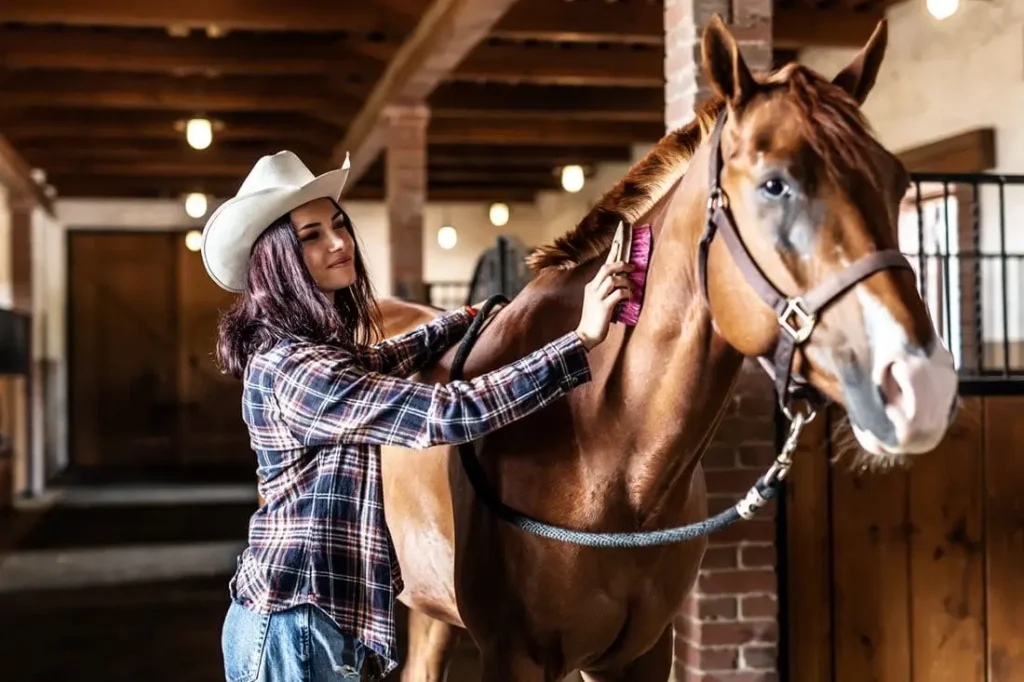
After using the curry comb, take the body brush to remove the loosened dirt and hair. Using firm, short strokes, brush in the direction of the hair growth. This not only cleans the coat but also stimulates the skin, improving blood circulation. Pay attention to areas that are prone to dirt buildup, such as the girth and under the belly.
3. Soft Brushing for Sensitive Areas
The soft brush is perfect for gently cleaning sensitive areas, including the horse’s face, legs, and belly. Use light strokes to avoid causing discomfort, especially around the eyes and ears. This brush gives the horse a soothing experience and helps them relax during grooming.
4. Mane and Tail Care
Using a mane and tail comb, carefully work through any tangles or knots. Start from the bottom and work your way up to avoid pulling out hair. For stubborn tangles, consider using a detangler spray. Regularly maintaining the mane and tail prevents matting and keeps them looking healthy and full.
5. Hoof Cleaning
Cleaning the hooves is a crucial part of grooming. Use a hoof pick to remove any dirt, stones, or debris from the hooves. Pay particular attention to the frog and the grooves on either side of it. Regular hoof cleaning prevents infections and allows you to check for any signs of discomfort or injury.
6. Finishing Touches
After completing the main grooming tasks, use a clean sponge or cloth to wipe down your horse’s eyes, nose, and dock. This ensures all areas are clean and comfortable for your horse. Additionally, you may want to apply a fly spray or coat conditioner, especially during the summer months, to protect your horse from insects and enhance their coat’s shine.
Establishing a Grooming Routine
Consistency is key when it comes to grooming. Establishing a routine ensures that your horse becomes accustomed to the process and allows you to monitor their health regularly. Aim to groom your horse daily, especially if they are in regular work or turnout. This not only keeps them clean but also provides an opportunity to check for any injuries or health issues.
Tips for a Successful Grooming Session
- Safety First: Always tie your horse securely and ensure the area is safe and free from hazards.
- Stay Calm: Horses are sensitive to emotions, so approach grooming with patience and calmness.
- Be Observant: Use grooming as a time to inspect your horse’s skin, coat, and hooves for any abnormalities.
- Make It Enjoyable: Turn grooming into a bonding experience with gentle words and rewards.
Troubleshooting Common Grooming Challenges
As a beginner, you may encounter some challenges while grooming. Here are a few common issues and how to address them:
Dealing with Sensitive Horses
If your horse is sensitive or nervous during grooming, approach them calmly and speak softly. Gradually introduce grooming tools and allow them to sniff and get accustomed to each one. Reward them for calm behavior, and take breaks if needed to prevent overwhelming them.
Handling Stubborn Tangles
Persistent tangles in the mane and tail can be frustrating. Use a detangler spray to help ease the process, and work through knots gently with your fingers before using a comb. Regular maintenance prevents tangles from becoming too severe.
Managing Dirt and Mud
Horses that spend time outdoors often get muddy. Allow mud to dry before brushing it off, as this prevents smearing and makes it easier to remove. Regular grooming helps keep dirt manageable and prevents skin issues.
Conclusion
Grooming is an essential part of horse care that benefits both the horse and the handler. For beginners, understanding the basics and establishing a routine is crucial. With the right tools, techniques, and a little patience, you can ensure your horse remains healthy, happy, and looking their best. Remember that grooming is not just about cleanliness; it’s an opportunity to strengthen the bond with your horse and contribute to their overall well-being.